NASCAR
The Good and Bad of Prime Video’s Inaugural NASCAR Season
As quickly as it arrived, five weeks are up and Prime Video’s chunk of the NASCAR season is over. NASCAR’s first-ever foray with streaming-exclusive broadcast coverage was very much a leap of faith into uncharted waters. Prime Video brought a fresh take on NASCAR broadcasting, but it was far from a perfect five-week run. Here are a few takeaways I had from either attending or watching all five of these races and where I think Prime Sports can flourish in coming years.
Positives
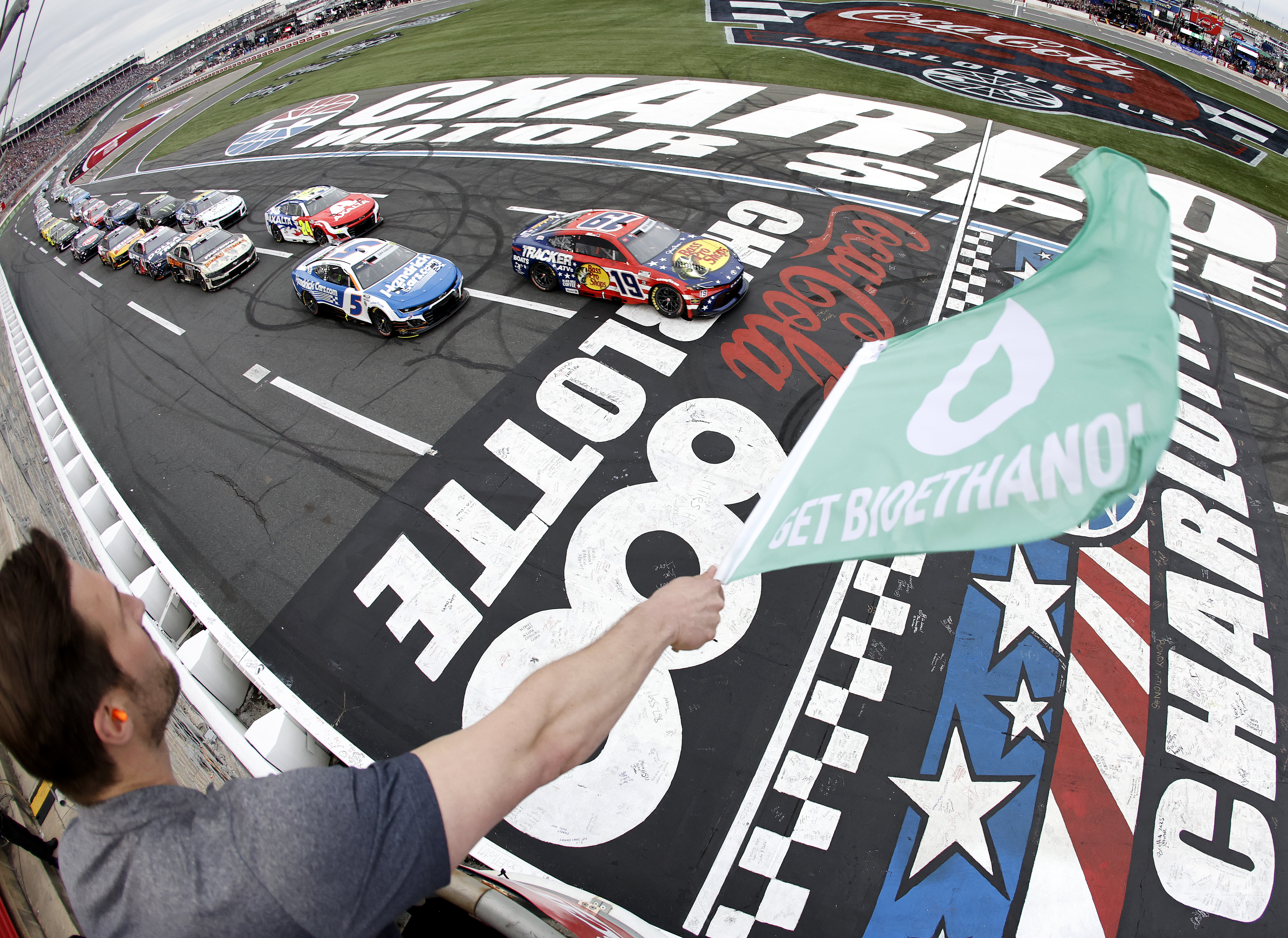
From the first ‘sign on’ at the Coca-Cola 600 in May, everyone knew they were watching a major event. Prime Video did a spectacular job out of the gate capturing the magnitude of auto racing’s biggest day and longest event. By adding more microphones, camera angles, and boots on the ground, Prime Video optimized the viewer experience through television. Implementing all of these features is very difficult for any motorsports broadcast to accomplish.
Energy from their pre and post-race on stage analysts and in the booth almost equaled the electricity on-track. Dale Earnhardt Jr. and Steve Letarte are a well known and respected pairing, and picked up right where they left off with NBC Sports in 2023. New lead play-by-play man Adam Alexander also shined, showing a commanding presence over the Crown Jewel night without overbearing commentary. The trio of Alexander-Earnhardt-Letarte may have been doing their first show together on May 25, but they sounded like three old friends who had been doing this for years. This same enthusiasm and vigor echoed from Charlotte onto Nashville, to Michigan, to Mexico City, and lastly to Pocono.
Extensive post-race coverage is also where Prime set a new standard by not being shoehorned with any hard out time or live programming up next. Each of their five races saw at least an hour’s worth of analysis and interviews after the checkered flag, far more than anything seen by any network in recent times. Stage host Danielle Trotta looked every bit of the experienced racing analyst she is, fitting perfectly alongside Corey Lajoie and Carl Edwards. Unfortunately, this amount of coverage may not be replicated on linear television. Any cable or network channel will likely have another live event or program to air after a race. Commercial-free coverage of the closings laps each week was a refreshing sight as well, and allowed drama to naturally build up until the checkered flag.
Pit road reporters were excellent as well. Kim Coon and Marty Snider showed their expertise as industry insiders and came across as both personable and knowledgeable. The new entry onto pit road was Trevor Bayne, who far exceeded any expectations placed on him. This trio did a superb job of mixing youth and experience into three unique perspectives for the broadcast team.
One final innovation that shined at the most recent Prime Video race in Pocono was ‘The Burn Bar.’ By showing drivers’ lap-by-lap fuel mileage in real time, this NASCAR broadcasting breakthrough should become the norm moving forward. A limited fuel supply on Chase Briscoe’s Toyota was seen being conserved slowly, which led to his win. It would be fitting to see this technology brought into other forms of racing to effectively paint the picture of fuel strategies.
Negatives
On paper the ratings numbers for Prime Video were a step down. Their average viewership of just over two million people a week was on par with numbers seen for previous cable races. Prime Video did come out of the gates swinging with their biggest viewer total at Charlotte, hitting 2.72 million households. This number does fall short, however, of 2024’s 3.1 million viewer total for the Coca-Cola 600 on FOX.
Despite the dips in ratings, a positive was seen by attracting the youngest audience for any Cup Series event since 2017. These declines also mirror Prime Video’s first year hosting Thursday Night Football in 2017. Subsequent seasons saw Prime’s TNF coverage rise to more respectable ratings. The same trends may occur with NASCAR.
There was also some backlash from a vocal section of the fanbase for taking NASCAR coverage off of linear television altogether, and putting it behind a different paywall. Internet technology admittedly may be far from perfect and still might not reach every home in the United States. There was a 30-day free trial offered by Prime Video, however, that covered the extent of their NASCAR season. This may be a uniquely 2025 problem, though, with NASCAR moving to several other networks across this season.
One final minor critique of Prime Video’s all around NASCAR product is with the pacing of their post-race coverage. Instead of speaking to storyline drivers immediately after the race, some interviews were delayed until far later in their coverage window. Front-loading some of top finishers and talking to others later in the post-race show may be a better formula in the future.
In closing, Prime Sports did well and handled their first year in the NASCAR Cup Series admirably. Some of their on-air talent will continue to cover NASCAR action on other networks throughout the summer and fall. In 2026 and beyond, it will be interesting to see how Prime’s coverage evolves, if any changes are planned, and what trickle-down effect Prime will have on other NASCAR broadcast partners.
Written by Peter Stratta
Be sure to follow us on Twitter/X
Be sure to follow the writer on Twitter/X
Photo Credits to Logan Riely/Getty Images