NASCAR
Richard Childress, Steve Phelps, Jim France all Testify in NASCAR Antitrust Case
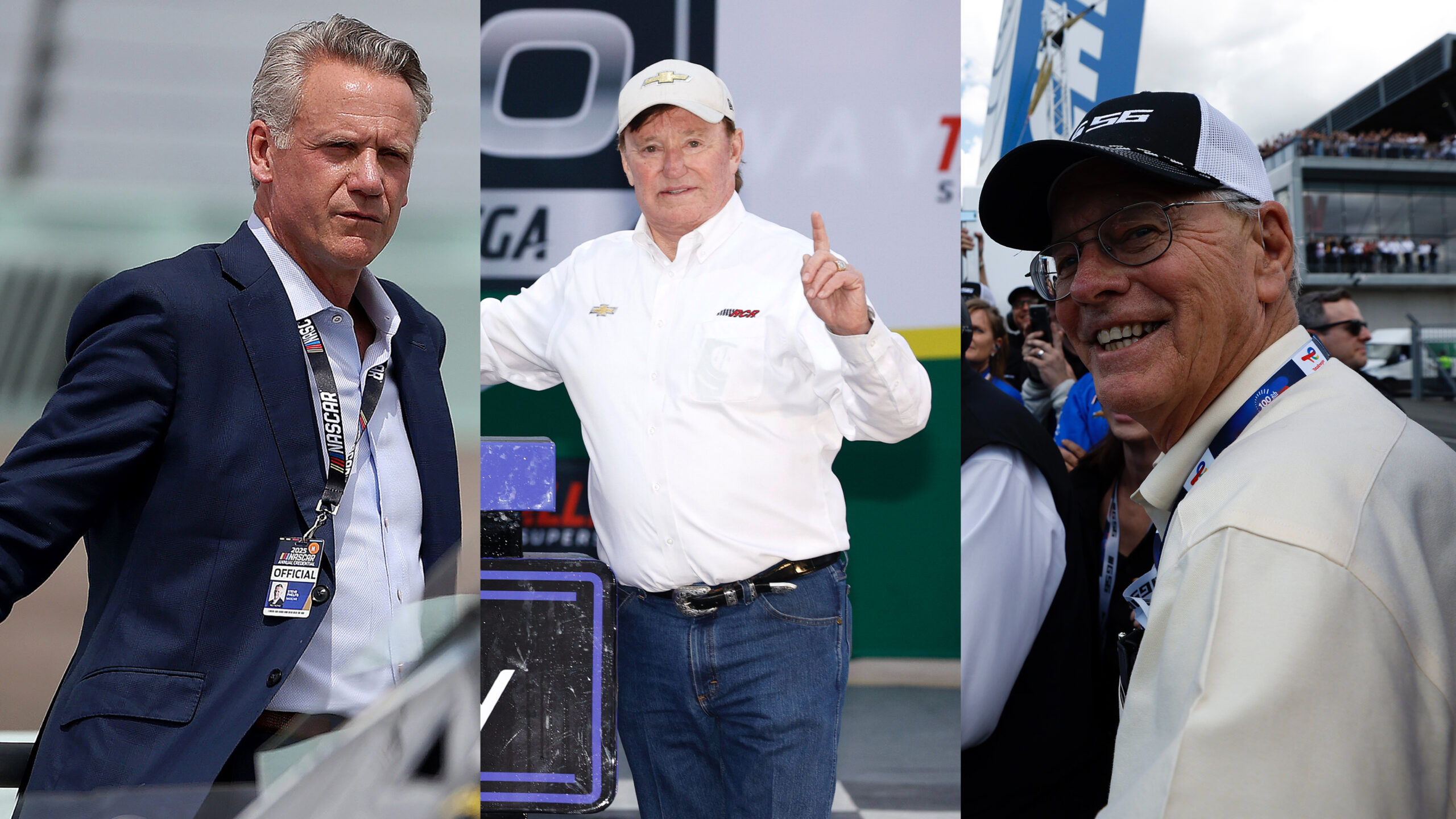
CHARLOTTE, N.C. – “We were negotiating a better contract for charters and it didn’t happen that way…We had to sign it,” Richard Childress said in his witness testimony for the 23XI & Front Row v. NASCAR antitrust case. The Hall of Fame car owner was one of five different witnesses to take the stand on Tuesday. This marked the most loaded day yet for the ongoing trial. Economist Professor Edward Snyder opened the day’s proceedings by concluding his questioning. He was then followed a brief session with accountant Anthony Smith. Childress was subsequently bookended by two of NASCAR’s top executives–Commissioner Steve Phelps and Chairman/CEO Jim France.
The aforementioned Snyder, Yale’s Business School Dean and a renowned economist, largely led Monday’s discussions. He spent much of the trial’s sixth day showing his in-depth analysis on the NASCAR industry from an economic perspective. He showed a very detailed comparison of NASCAR across eight other professional sports. By using Formula 1 as a benchmark measure, Snyder determined that both 23XI and Front Row were each owed $215.8 million and $148.9 million respectively in lost revenue. NASCAR’s counsel opened Tuesday by grilling Snyder on using F1 as a parallel instead of IndyCar or pre-2014 NASCAR. Snyder said data for these leagues were not available.
Anthony Smith, a CPA representing Charlotte-based firm GreerWalker, was quickly in and out to verify data presented by non-plaintiff race teams. Under anonymity, Smith received financial operating numbers from 12 Cup Series teams between the years of 2020-2024. This data was divided out by individual cars. Neither Smith nor his firm did any analysis of this data. They merely took it and organized the numbers into a chart. These involved teams did not include either 23XI or Front Row.

Financial data gathered by GreerWalker and Anthony Smith, anonymously organized by race team and individual car per season.
Smith’s brief session led right into extended questioning of NASCAR Commissioner Steve Phelps. Phelps had served as NASCAR President from 2018 until March 2025. His title shifted this year despite many months of “almost identical” responsibilities. It was soon revealed that as Commissioner, Phelps’ annual salary is $2.5 million with a bonus potential of another $2.5 million. Phelps characterized this change in NASCAR’s executive team as Steve O’Donnell being shifted to more day-to-day operations, while he took on more long-term strategy goals.
Phelps was soon pressed on yearly NASCAR financial numbers, including a $36 million spike in 2023. This mirrored selling most of the land that was formerly Auto Club Speedway in Fontana, California. Phelps said money from this deal was used to help pay down debt from NASCAR purchasing International Speedway Corporation (ISC). This move reportedly “benefitted all of our shareholders.” Phelps also said “my hope is that eventually we’ll build a short track” on the 98 acres of land NASCAR still holds here.
Phelps was then asked about his involvement in NASCAR’s five-year track sanction agreement that ran from 2015 through 2020. In an email to past NASCAR President Brent Dewar, Phelps called this deal “Fantastic. The best NASCAR board deck I’ve ever seen.” Despite teams back then reportedly losing $85 million per year, NASCAR had $60 million in profits while racetracks made $68 million.
This 50-page marketing deck from May 2015 reportedly motivated race teams to begin exploring the possibility of forming their own series. These concerns may have led to exclusivity language being inserted into track sanction agreements. Phelps defended this by saying “We needed to know what [race] purse could be, it was a variable component.” Phelps then urged that he was not personally involved in the exclusivity aspect of this deal. This agreement extended through the charter extension’s February 2020 deadline. Phelps then said single-year deals with individual racetracks from 2021 onwards “led to more schedule flexibility.”
As mentioned above, the Race Team Alliance (RTA) was pondering hosting their own independent stock car event in 2015. Plans were far enough along to have a car developed “to run on dirt tracks.” A message from Dewar to Phelps showed NASCAR opposition to this idea, saying they “would fight to protect our sport against market/brand dilution.” This potential rival series still was far off from ever coming to fruition, and the idea was eventually abandoned. Plaintiff attorney Jeffrey Kessler alleged that the RTA would not get a charter deal if these dirt events ever took place.
Phelps later answered what his initial impressions were on the Superstar Racing Experience (SRX). This summer short track series lasted from 2021-2023 and included many current and past NASCAR stars on short tracks around the country. Phelps “was concerned out of the gate over SRX, but it grew smaller over time.” At one point SRX was rivaling television ratings pulled in by Xfinity and Truck Series races. This led Steve O’Donnell to tell NASCAR’s legal team to investigate the startup series and see if any lines were crossed. Phelps said at the time he was “frustrated owners were racing in a series with sponsors, colors, and liveries that looked like NASCAR.” After finding no legal right to challenge this league, Phelps said these concerns were dropped. NBC Sports executive producer Sam Flood raised his own concerns about SRX, however. Flood told O’Donnell: “[this is] causing confusion in the marketplace, I’m not happy.” This conversation reportedly happened after Chase Elliott won a race at the Nashville Fairgrounds Speedway in a Napa-sponsored car that mirrored his NASCAR stock car. The sudden rise in popularity of SRX came in the midst of NASCAR negotiating their media rights extension.

Chase Elliott (No. 94) and father Bill Elliott (No. 9) in the SRX race at Fairgrounds Speedway Nashville on Saturday, July 13, 2021. Photo Credit: Dylan Buell/SRX via Getty Images
Phelps was then asked about his role in the 2025 charter agreement negotiations. He admitted to being very involved in what was “one of the most challenging and longest negotiations I’ve ever been part of.” Phelps privately told Rick Hendrick “We wish we could give permanent charters but [Jim] France doesn’t want that.” Phelps testified that he had no memory of saying this to the Hall of Fame owner. A team counterproposal to an old version of the 2025 charter agreement did include evergreen charters. Both O’Donnell and Scott Prime presented this to Jim France and made efforts to convince the Chairman, who they called “a brick wall.”
Phelps later said that he “was frustrated as the lead negotiator,” in this back-and-forth affair. Ultimately this deliberation between the sanctioning body and the teams stretched out over two-and-a-half years. Phelps called NASCAR adding a seven-year extension onto the charters a compromise the teams liked.
Phelps said the Team Negotiating Committee (TNC) “Stuck to their four pillars…they are playing with fire.” The NASCAR Commissioner’s cross-examination ended with him reiterating that “the charter deal was fair, we had lots of options.” At this point Phelps left the stand for the court’s lunch recess. As he walked back to NASCAR’s gallery, his face looked very visibly red after clashing against Kessler.
Phelps later admitted “Can a better mousetrap be made? Yes, I’d like to try it. I do view the charters as essentially permanent, Brad Keselowski said so too.” The last bit of this comment led to an objection by the Plaintiffs on hearsay, one of a few of these moments incurred by Phelps.
Witness number four of the trial’s seventh day would be Cup Series team owner Richard Childress. The 80-year-old Hall of Famer opened by admitting the NASCAR Cup Series’ financial model is challenging. He said “Other businesses help pay bills, it’s a very challenging deal.”
“I wouldn’t have signed [the 2025 charter agreement] if I was financially able to sustain myself without them. We’re a blue-collar operation and proud of it.” Childress later recalled that he signed the agreement around 8 p.m. on the fateful night of September 6, 2024.
Childress then explained a letter he wrote to Jim France on April 11, 2024. In this message, Childress stated four key issues for RCR he wanted the new charter deal to handle. On the stand, Childress said “there were more but these were key.”
- Charter length – “Making charters extend indefinitely is far and away most important to me…this new car really is expensive…RCR has lost money on its Cup teams. I’d love to see RCR still running 60 years from now, with this model we can’t.” Childress went onto say their recent purchase of a Professional Bull Riding (PBR) franchise was made for $4 million, and another team just sold for $22.5 million. “It didn’t cost PBR nothing to give us a franchise, it wouldn’t cost NASCAR nothing.”
- New business – Childress argued for collective intellectual property rights for teams, wanting one-third of revenues from any new business streams such as gambling.
- Governance – “Teams believe in the importance of having a seat at the table for big decisions. Let’s all talk about any changes before they happen. Try to control costs in a partnership with NASCAR.”
- Revenue to teams – Childress said they did not get this or any of these four terms in the new charter deal.
Teams were asking for $720 million in revenue uptick, and the 2025 charter agreement granted them $450 million. This breaks down to $12.5 million per chartered car, still short of the $20 million that’s a lynchpin for 23XI and Front Row’s case.
These four issues raised by Childress mirror the four pillars that 23XI and Front Row used to build this trial. Childress went on to say “if media rights go up, we’ll go up with you…we’ll all work and push hard together for more value.”
Childress’ turn on the trial stand was immediately followed by NASCAR Chairman/CEO Jim France. The 81-year-old leader was quick to disagree with certain phrasing used by Kessler in his statements, but didn’t deny being against evergreen charters.
Kessler soon determined that NASCAR is owned by the France family through trusts, where Jim France holds the majority stake. The plaintiffs’ attorney proceeded to spend his examination session focused on several team owners’ requests for permanent charters. Kessler hammered home that owners including Rick Hendrick, Roger Penske, Joe Gibbs, and Jack Roush are all close friends of France, and were pleading for this provision. ‘Permanency’ was the term tossed around by multiple owners that appeared to be a thorn in France’s side and halted any progress.
Kessler referenced past testimony from Joe Gibbs Racing team owner Heather Gibbs. Last week she detailed her 2024 letter to NASCAR requesting team charters.
Similar letters from Roush, Hendrick, and Penske all mentioned these respective owners’ desire for NASCAR to designate charters as permanent assets. “We did not agree to evergreen or permanent charters, no,” France said. The remainder of France’s time was largely defined by a lot of “not recalling” or “I don’t know” when asked about specific meeting details.
Failure to grant permanent charters may have been example of illegal anti-competitive behavior. The plaintiffs are attempting to prove this claim through evidence. NASCAR’s defense, meanwhile, is simply construing the argument as a negotiating issue. The nine-person jury will decide this case’s fate through unanimous ruling.
At this time, the plaintiffs have concluded their witnesses and those testifying now come from the defense. Judge Bell and both counsels remain committed to ending their questioning by Friday evening, but still have five people to rotate through. Three of these witnesses are team owners Rick Hendrick, Roger Penske, and Curtis Polk. Stay tuned for continued updates from the Charlotte Federal Courthouse as this trial begins to wind down.
Written by Peter Stratta
Be sure to follow us on Twitter/X
Be sure to follow the writer on Twitter/X
Photo Credits to James Gilbert, Sean Gardner, and Chris Graythen/Getty Images